
CALIBER ENGINEERING
Engineering with Purpose.
Precision is engineered, not assumed.
CALIBER approaches guitar making and mechanical design through a shared principle: every structural decision must serve a defined purpose.
From precision tuning mechanisms to experimental soundboard architecture, each design is shaped by the interaction of mechanical function, material selection, manufacturing constraints, and the musician’s experience.
01 — MINIATURIZATION
The Challenge of Miniaturization.
Translating an industrial precision-motion principle into a guitar tuning machine requires more than reducing its dimensions.
The Roller Cam mechanism must operate within a compact assembly while accommodating continuous string tension, precise component alignment, and the resistance required for manual tuning.
CALIBER’s development focused on adapting the geometry and arrangement of the mechanism to these constraints without treating miniaturization as a simple scaling exercise.
롤러캠 전체 조립 CAD 3:4

4:3

02 — CONTROLLED RESISTANCE
Backdriving & Controlled Resistance.
A rolling-contact mechanism introduces a particular challenge when adapted for a guitar tuning machine: the possibility of reverse motion under continuous string tension.
Smooth manual adjustment must coexist with sufficient resistance to unintended movement.
CALIBER addresses this design requirement through the coordinated consideration of contact geometry, controlled friction, and the mechanical interfaces within the assembly.
03 — CONTACT PRECISION
Eight-Point Contact Precision.
CALIBER’s Roller Cam system incorporates an eight-point contact arrangement, placing particular demands on component positioning and assembly accuracy.
In a mechanism with multiple interacting contact points, small deviations in alignment can affect the relationship between the cam, its followers, and the supporting shaft.
This made precise shaft support and bearing alignment fundamental requirements in the development of CALIBER’s Roller Cam architecture.
1:1

1:1 or 4:3
04 — BEARING ARCHITECTURE
Precision Begins at the Shaft Support.
CALIBER incorporates miniature ball bearings with a 3 mm inner diameter and a 6 mm outer diameter at the Roller Cam shaft-support interface.
The bearing housings are formed directly within the side plates rather than attached as separate components, reducing an additional source of assembly alignment variation.
This integrated architecture was selected to support the precise shaft positioning required by CALIBER’s eight-point contact mechanism, with long-term durability as a central design objective.
05 — SHAFT ARCHITECTURE
Three-Part Shaft Architecture.
Integrating the bearing housings into the side plates established a critical assembly constraint: a conventional one-piece shaft could no longer be installed within the resulting structure.
CALIBER developed a three-part shaft architecture to enable assembly while retaining the integrated bearing-support design.
The segmented construction also allows each functional section to use a material suited to its requirements, with weight management as an additional consideration.
4:3

4:3

06 — TACTILE ENGINEERING
Engineered Friction & Tactile Control.
CALIBER’s external tubular shaft housing is designed as a functional component rather than a purely decorative sleeve.
An internal groove retains lubricant, while deliberately specified shaft-to-housing clearance and lubrication conditions are considered together to shape rotational resistance during manual tuning.
The tubular housing is secured to the side plate through a Ø1 mm pin interface, preventing it from rotating together with the shaft. This fixed arrangement is essential to maintaining the intended relationship between the shaft, housing, and lubrication system.
This approach recognizes tactile feedback as an engineering consideration alongside mechanical precision, allowing the tuning experience to be addressed through the design of the supporting components.
07 — DETAIL ENGINEERING
Vibration Management & Detail Engineering.
CALIBER incorporates purposefully positioned O-rings and a string-shaft bushing as part of its approach to managing vibration transmitted through the tuning mechanism.
An O-ring is also positioned beneath the Roller Cam wheel’s retaining screw in place of a conventional spring washer.
The custom retaining screw features a flat, slotless upper profile, a 10-degree tapered side surface, and a Ø1 mm side hole for pin-operated adjustment.
Finished in the same black-brown DLC coating as the Roller Cam wheel, this detail creates a consistent visual identity across both ONYX and AURUM.
4:3/나사의 형상이 잘 보이는 CAD 확대 이미지 한 장
3:4

08 — STRING MANAGEMENT
Stabilized String Post with Plunger Mechanism.
Developed from practical guitar-making and repair experience, CALIBER’s plunger mechanism introduces an alternative approach to securing the string within the string post.
The design aims to reduce unnecessary string compression and the amount of string required for secure installation, while supporting a more controlled string-changing process.
It also addresses a familiar maintenance problem: reinstalling an individual string when its remaining length makes conventional rewinding difficult.
09 — MATERIAL ENGINEERING
Materials Selected with Purpose.
Material selection and surface treatment are integral to CALIBER’s engineering approach, balancing structural requirements, product identity, and manufacturing considerations.
AL 6061-T6
Matte Black Finish
Nano-Coating
Brass UNS C36000
Matte Natural Brass Finish
Passivation-Type Finish / Anti-Oxidation Nano-Coating
PURPOSE-DRIVEN MANUFACTURING
RC·AURUM incorporates rear-side weight-reduction pockets to manage the greater mass of its Roller Cam architecture. The lighter WG·AURUM omits this additional machining operation, reflecting a different balance between mass and manufacturing cost.
PART II — GUITAR STRUCTURAL ENGINEERING
CALIBER / INSTRUMENT RESEARCH
Engineering the Soundboard.
1600*1200

From Observation to Structural Exploration.
Inspired by architectural truss structures in 2011, CALIBER began exploring an alternative approach to supporting the classical guitar soundboard.
The research developed through successive prototypes and structural revisions, eventually evolving from the original Floating Lattice concept into the Floating Truss Network in 2026.
The objective is to investigate how structural support and soundboard movement can be considered together rather than treating reinforcement as a continuously bonded framework.
10 — STRUCTURAL PRINCIPLE
The Floating Principle.
Unlike conventional braces bonded continuously to the guitar soundboard, the Floating Truss Network employs structural members elevated above the soundboard and supported at selected attachment nodes.The nodes establish defined points of structural connection,
allowing the truss members to span the regions between them without continuous bonding to the soundboard surface.The floating principle is independent of carbon reinforcement.
Spruce members may be used alone or selectively reinforced with carbon according to their intended structural role.
1600 × 1200px

1600 × 1200px
11 — LOAD DISTRIBUTION
Independent Load Networks.
The Floating Truss Network is divided into two independent structural regions positioned in front of and behind the bridge.
Rather than extending a single continuous network across the bridge, CALIBER explores different load-distribution arrangements for the two regions.
The front network emphasizes transverse connections, while the rear network is developed with a predominantly longitudinal orientation.
This distinction reflects an approach to structural design in which each region is considered according to its position and intended mechanical role.
12 — MATERIAL STRATEGY
Material & Structural Tuning.
The Floating Truss Network is developed through material selection as well as structural geometry.
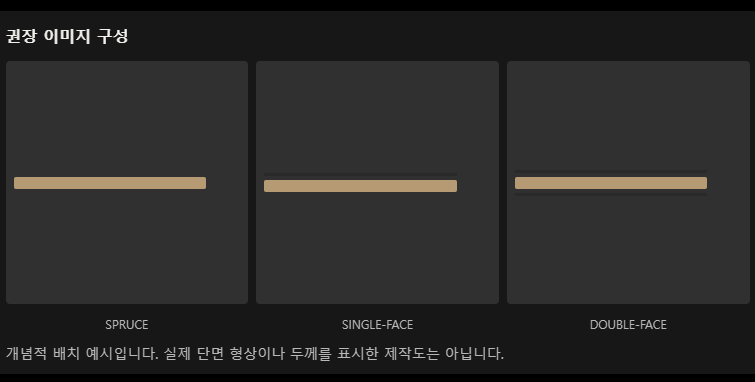
Spruce may be employed as the primary structural member, either independently or with selective carbon reinforcement on one or both faces.
These configurations offer different approaches to balancing stiffness, mass, and structural support. Their application is considered in relation to the intended role of each truss member rather than following a single fixed material formula.
1600 × 1200px
CALIBER / ENGINEERING PHILOSOPHY
Engineering with Intention.
From precision tuning mechanisms to the structural design of classical guitars, CALIBER approaches engineering as a continuous process of questioning, refinement, and deliberate decision-making.
Every material, component, and structural arrangement is considered in relation to its intended function, manufacturability, and the experience of the musician.
Different disciplines. One engineering philosophy.